
A new aircond installation is only the beginning. After the unit is installed, simple maintenance habits can help protect cooling performance, reduce unnecessary strain and make it easier to spot small problems before they become expensive repairs.
For homes and businesses in Kuala Lumpur and Selangor, the most useful routine is straightforward: keep the filters clean, protect airflow around the indoor and outdoor units, watch the drainage, use sensible settings and arrange professional servicing before performance noticeably drops.
If your unit was recently installed, start with these post-installation aircond care steps. For installation scope or a new installation booking, visit our Aircond Installation KL & Selangor service page.
Quick answer: Check the filter regularly, keep the condenser clear, watch for leaks/noise, and schedule routine servicing at least twice a year for typical use. Heavily used or older units may need attention sooner.
Technician cleaning the air filter of a wall-mounted aircond after installation in KL
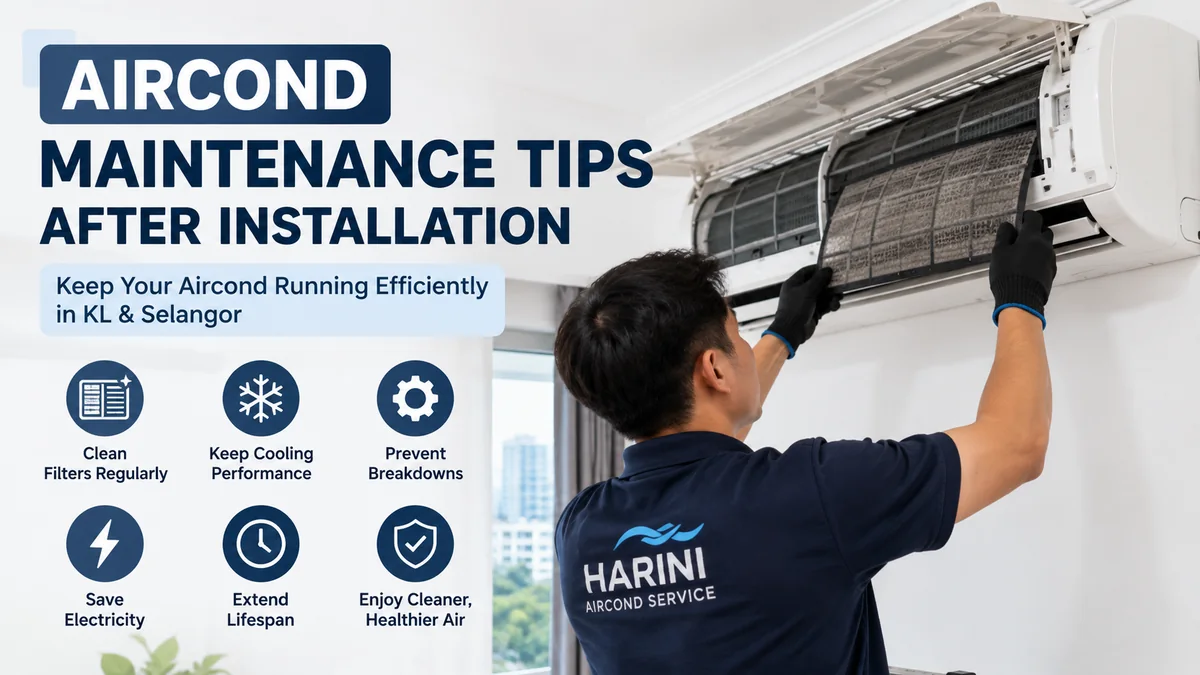
1. Clean the Air Filters Regularly
The air filter is one of the easiest parts of the system for a homeowner to monitor. When dust builds up, airflow through the indoor unit drops. The aircond may take longer to cool the room and can end up working harder than necessary.
How often should you check it? Follow the manual for your exact model and consider how heavily the unit is used. Some manufacturer guidance recommends cleaning reusable filters about every two weeks. In a dusty home, a busy office or a unit that runs for many hours each day, inspection may need to be more frequent.
If your filter is washable, clean it according to the manufacturer instructions and allow it to dry properly before reinstalling it. Do not force, bend or reinstall a wet filter unless your model instructions specifically allow it.
2. Keep the Indoor Airflow Clear
Do not block the air inlet or outlet with tall cupboards, curtains, shelves, decorations or stacked boxes. Good airflow helps the aircond distribute cool air more evenly across the room.
After installation, it is common for furniture to move back toward the wall. Check that the final room layout still gives the indoor unit a clear path to draw in and discharge air. If one area of the room feels warm while another feels excessively cold, airflow obstruction or poor air distribution may be part of the problem.
3. Keep the Outdoor Condenser Clear and Ventilated
The outdoor unit needs space to release heat. Do not surround it with storage boxes, plants, laundry, renovation materials or other objects that restrict airflow.
For balconies and service yards, check the condenser periodically for leaves, dust and obvious obstructions. Do not open the unit or attempt electrical or refrigerant work yourself. The homeowner’s job is simply to keep the area around it accessible and unobstructed.
Good access also matters later. If the condenser becomes impossible to reach because storage or built-in cabinets have been added around it, routine servicing and future repair work can become harder and more expensive.
Post-installation aircond care guide covering filters, outdoor airflow, settings and servicing
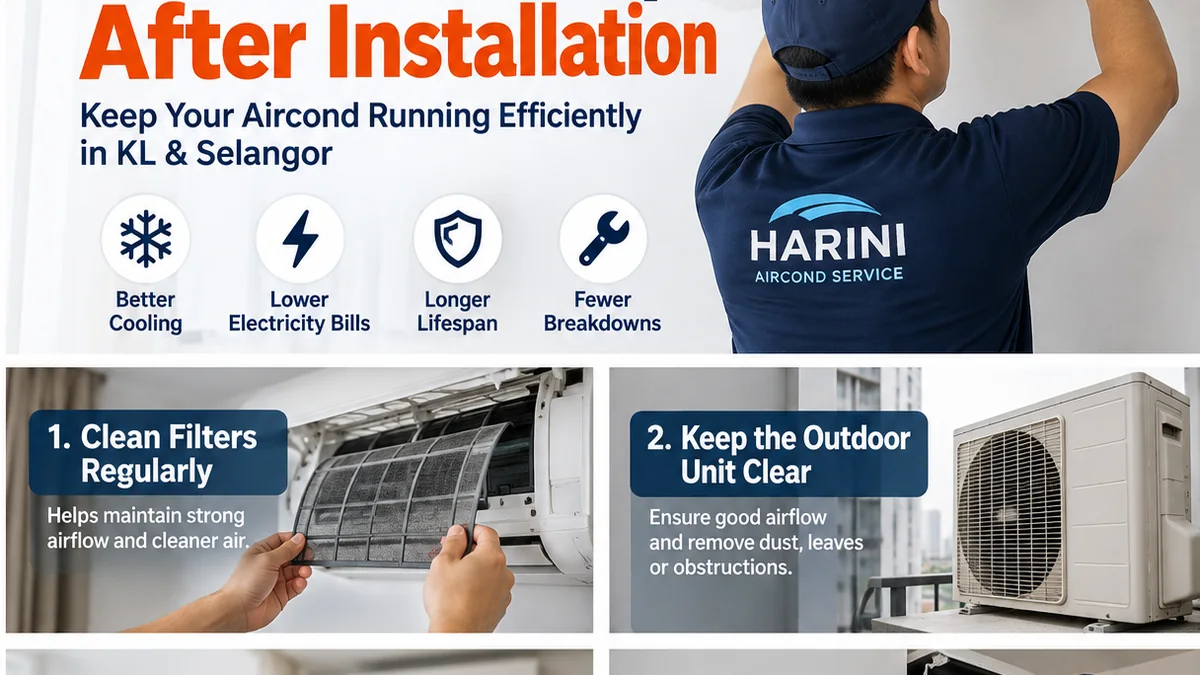
4. Watch the Drainage After Installation
A properly operating aircond removes moisture from the room, so the drainage system matters from day one. After installation, keep an eye out for water leaking from the indoor unit, unusual dripping, damp marks near the wall or water backing up around the drain route.
A small amount of water at the intended outdoor drainage point can be normal during cooling. Water appearing inside the room is not something to ignore. If the unit begins leaking indoors, switch it off if necessary and arrange an inspection rather than repeatedly wiping the water away.
5. Use Sensible Temperature and Fan Settings
An aircond does not cool a room faster simply because the thermostat is set to the lowest possible temperature. Choose a comfortable setting and allow the system time to reach it.
If you use an inverter model, long, steady operation at a reasonable setpoint can allow the compressor to adjust its output as the room approaches the target temperature. Your actual energy use still depends on room size, heat load, insulation, unit efficiency, usage hours and maintenance condition.
If cooling suddenly becomes weaker at the same settings you normally use, do not automatically lower the temperature further. First check the filter and airflow, then arrange servicing if performance remains poor.
6. Schedule Professional Aircond Servicing Before Problems Build Up
Routine homeowner care cannot replace professional servicing. Aircond Service Harini currently recommends routine servicing at least twice a year, with older or heavily used units needing closer attention.
A professional service can check areas that are not appropriate for routine DIY maintenance, such as the blower, coils, drain line, operating condition, refrigerant-related symptoms and electrical or mechanical issues.
For a bedroom unit used only occasionally, the schedule may differ from an office aircond running most of the day. Use the twice-yearly recommendation as a practical baseline and shorten the interval when usage, dust or operating conditions justify it.
Professional technician carrying out routine aircond maintenance after installation in KL
7. Avoid Spraying Random Cleaning Chemicals Inside the Unit
Do not assume that a household cleaning spray is safe for the internal components of an aircond. Manufacturer guidance warns that inappropriate commercial cleaning products can damage internal materials and may contribute to problems such as water leakage.
For normal homeowner maintenance, stay within the cleaning steps described in your unit manual. If the evaporator coil, blower or internal components need deeper cleaning, book a proper service instead of experimenting with strong chemicals.
8. Know the Early Warning Signs
Arrange an inspection when you notice changes such as:
- Cooling becomes noticeably weaker than usual
- Water leaks from the indoor unit
- New rattling, grinding or unusually loud operating noise
- Persistent unpleasant smell even after basic filter cleaning
- The unit switches off unexpectedly or trips the breaker
- Ice, unusual condensation or repeated error indications
- The aircond runs for long periods but the room still does not become comfortable
These symptoms do not all have the same cause. A technician should diagnose the system before refrigerant, parts or deeper cleaning are recommended.
Aircond maintenance reminders and early warning signs after installation
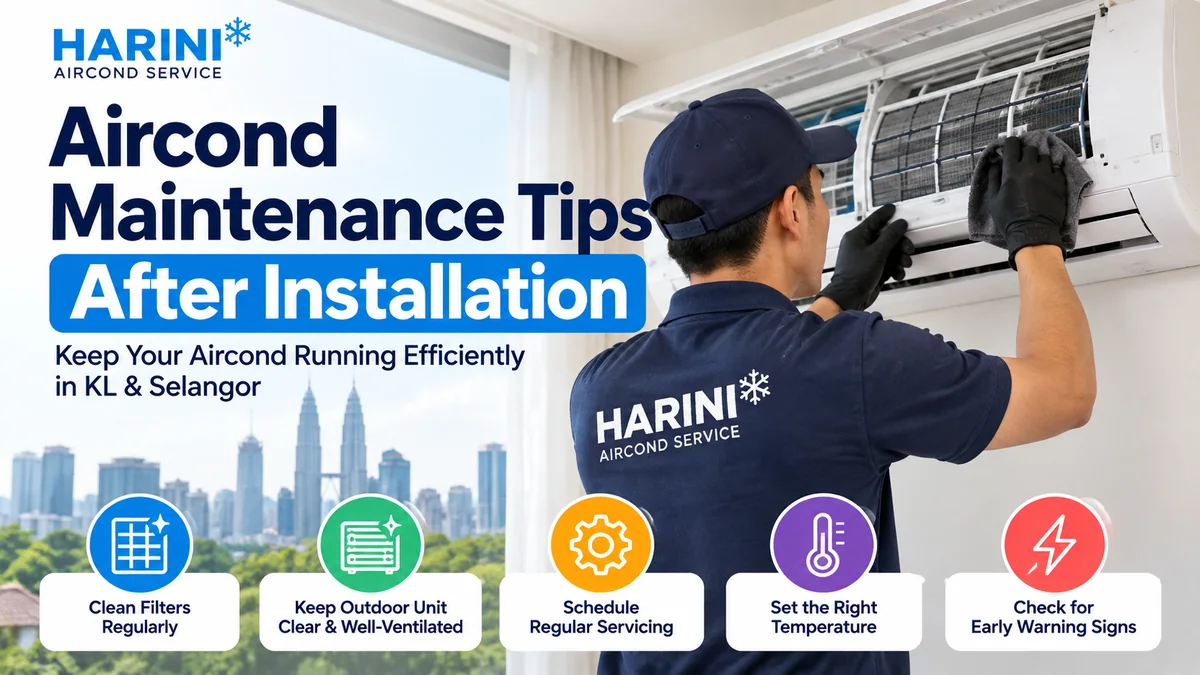
Simple Post-Installation Maintenance Schedule
| When | What to Check | What to Do |
|---|---|---|
| Every few weeks | Filter condition and indoor airflow | Clean reusable filter according to the model manual when dusty. |
| Monthly | Outdoor-unit access, visible debris and drainage | Remove obvious obstructions around the condenser; look for abnormal indoor leakage. |
| At least twice a year | Overall system condition | Arrange routine professional servicing; heavy-use units may need more frequent attention. |
| Immediately when symptoms appear | Weak cooling, leaks, abnormal noise, smell or electrical issues | Stop guessing and arrange inspection/repair before the problem worsens. |
Frequently Asked Questions
How do I maintain my aircon after installation?
Keep the filter clean, avoid blocking indoor and outdoor airflow, monitor drainage, use sensible settings and arrange routine professional servicing.
How often should I clean the aircond filter?
Follow the manual for your model. Some manufacturer guidance recommends cleaning reusable filters about every two weeks, especially with frequent use. Check more often in dusty environments.
How often should aircond be serviced in KL?
Aircond Service Harini currently recommends routine servicing at least twice a year, while older or heavily used units may need closer attention.
Is water dripping from the aircond normal?
Water leaving through the intended drainage route can be normal. Water leaking from the indoor unit or damaging the wall should be inspected.
Can I spray aircond cleaner inside the unit myself?
Avoid random household or commercial cleaners inside the system. Follow the manufacturer manual for homeowner cleaning and use a professional service for deeper internal cleaning.
When should I call an aircond technician?
Call when cooling drops, the unit leaks, produces unusual noise or smell, shows repeated errors or has electrical symptoms such as tripping a breaker.
Does maintenance affect electricity use?
A dirty filter and restricted airflow can reduce cooling performance and make the system work harder. Keeping the system clean and correctly maintained supports efficient operation, but actual electricity use also depends on the unit, room and usage pattern.
Should I service a newly installed aircond immediately?
A new installation should be tested at handover. Routine servicing usually begins according to usage and the maintenance schedule rather than immediately, unless a problem appears after installation.
Keep Your Aircond Performing After Installation
The best maintenance plan is not complicated. Keep the system clean, protect airflow, notice changes early and service the unit before small issues become major problems.
If your aircond in Kuala Lumpur or Selangor is due for routine servicing, has started leaking, sounds different or no longer cools the way it should, send Aircond Service Harini your location, unit type and a short description of the problem so the team can recommend the appropriate next step.
| Book Aircond Service in KL & Selangor
Call / WhatsApp: 011-5122 3936 | Email: admin@aircondserviceharini.com |