
Choosing between a wall-mounted split aircond and a ceiling cassette aircond is mainly a question of space, airflow, ceiling design and installation requirements — not simply which system looks more expensive or powerful.
For most Malaysian bedrooms, apartments and standard living rooms, a correctly sized wall-mounted split aircond is usually the simpler and more practical option. A cassette aircond becomes more attractive for larger open spaces, offices, shops and rooms where multi-directional airflow or a cleaner ceiling-integrated look matters.
One important clarification: “split” and “cassette” are not opposites in the strict technical sense. A cassette can also be part of a split system. In this guide, “split aircond” means the common wall-mounted split unit, while “cassette aircond” means a ceiling-mounted cassette indoor unit.
Quick Comparison: Split Aircond vs Cassette Aircond

| Factor | Wall-Mounted Split | Ceiling Cassette |
|---|---|---|
| Typical use | Bedrooms, condos, homes, small offices | Large living areas, offices, shops, restaurants, open spaces |
| Indoor placement | Mounted high on a wall | Recessed into or mounted within the ceiling |
| Airflow | Primarily from one wall position | Often distributed in multiple directions depending on model |
| Ceiling requirement | No ceiling void required | Usually needs suitable ceiling space and service access |
| Installation complexity | Generally simpler | Usually more involved due to ceiling, drainage and support requirements |
| Visual impact | Indoor unit remains visible on wall | Main body is concealed; decorative panel remains visible |
| Maintenance access | Usually straightforward from the wall | Requires safe access to the ceiling unit and filter/panel |
When Is a Wall-Mounted Split Aircond the Better Choice?
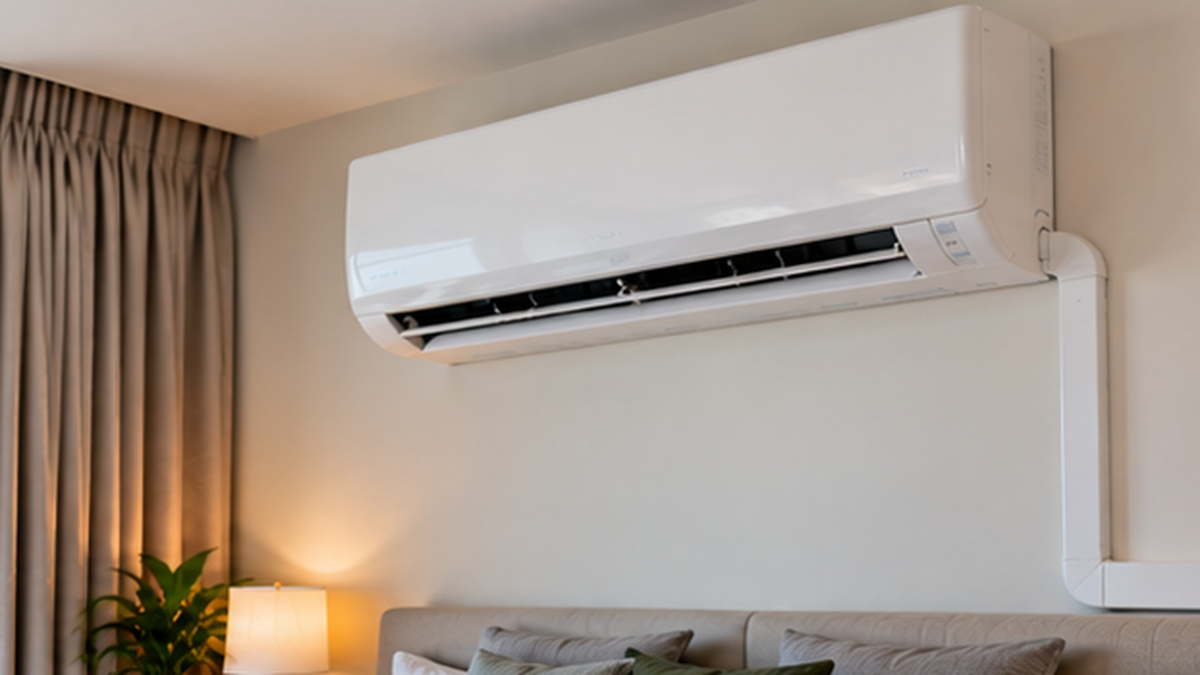
A wall-mounted split aircond is often the most practical choice when you need dedicated cooling for one room or a clearly defined area.
It works particularly well for bedrooms, study rooms, apartments, condominiums and many normal living rooms because the indoor unit can be installed without modifying a ceiling. The technician still needs to plan the wall position, drainage, refrigerant piping, electrical connection and outdoor condenser location, but the indoor installation is usually more straightforward than a recessed cassette.
A split unit is also easier to consider when ceiling space is limited, when the property is rented, or when you want simpler access for routine cleaning and maintenance.
When Does a Cassette Aircond Make More Sense?
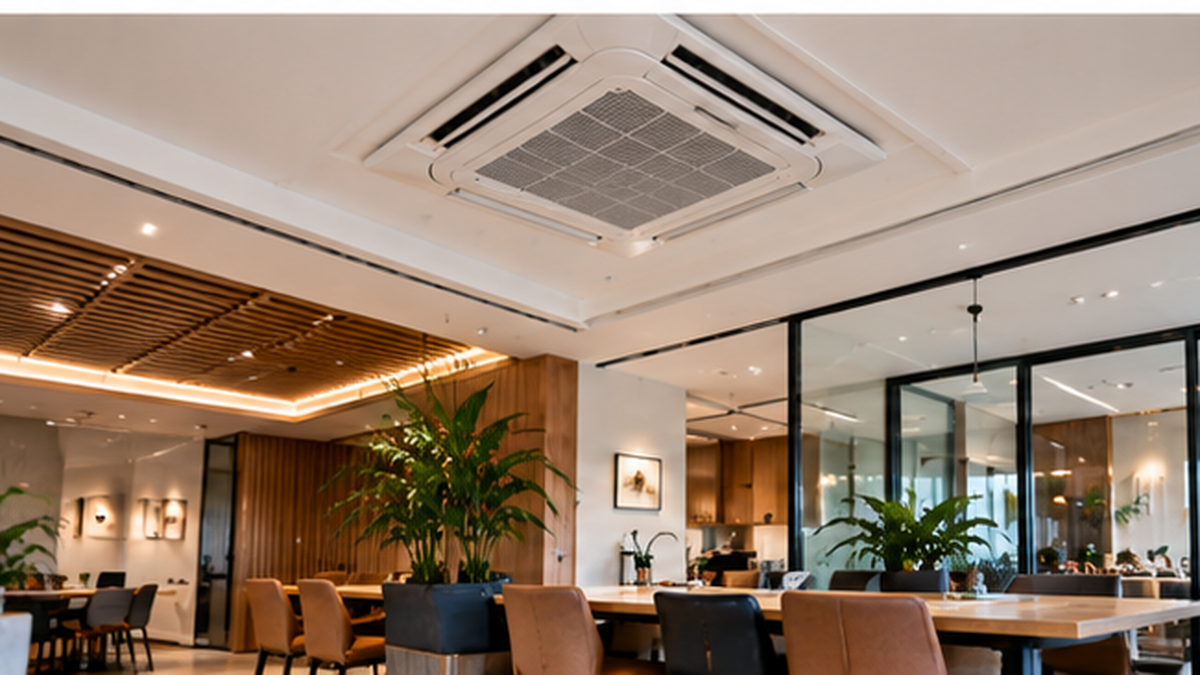
A cassette aircond is useful when the room is larger, more open or needs airflow from a more central position.
Daikin Malaysia describes cassette systems as providing cooling across the room, while Panasonic Malaysia offers one-way, mini four-way and four-way cassette configurations for different installation environments. The practical advantage is that air can be distributed from the ceiling rather than relying on one wall-mounted discharge point.
Cassette systems are therefore commonly considered for offices, retail shops, restaurants, conference rooms and larger open-plan areas. They can also suit premium residential spaces when the ceiling design and installation conditions allow it.
1. Compare the Room Layout and Airflow
Start with the shape of the room rather than the aircond type.
In a normal bedroom or compact living room, a well-positioned wall-mounted split unit can distribute air effectively without the additional work of installing a ceiling cassette.
In a wide open-plan space, however, one wall position may create areas that cool faster than others. A centrally located cassette with multi-directional airflow can be useful where balanced distribution is the priority.
Large windows, high ceilings, open connections to other rooms and heavy occupancy can also affect how the space should be cooled. The aircond capacity still needs to be selected correctly regardless of the indoor-unit style.
2. Check Whether the Ceiling Can Support a Cassette
This is one of the biggest practical differences.
A wall-mounted split unit does not require a ceiling void. A cassette unit, by contrast, usually needs enough ceiling space for the indoor body, refrigerant piping, drainage and future service access.
Some cassette models include built-in drain pumps, but the exact drainage design depends on the model and site. The installer also needs to assess ceiling support, the decorative panel position and whether the unit can be accessed later without damaging the ceiling.
If the property has a solid slab ceiling with no suitable void or access, a cassette installation may require substantially more work or may simply be inappropriate.
3. Think About Appearance and Wall Space
A cassette can create a cleaner appearance because most of the indoor unit sits within the ceiling and only the panel remains visible.
That can be useful in retail stores, restaurants, offices or modern open-plan interiors where wall space is valuable for shelving, artwork, displays or furniture.
A wall-mounted split is more visible, but that is not necessarily a disadvantage. Modern split units are compact, and for bedrooms or apartments the simpler installation can be more important than hiding the indoor unit.
4. Compare Installation Requirements
Neither system should be chosen without considering the complete installation route.
For a wall-mounted split, the technician usually needs a suitable indoor wall, an outdoor condenser location, a drainage route, electrical supply and refrigerant piping between the units.
A cassette normally adds ceiling access, support, panel alignment and more complex drainage considerations. The contractor may also need to coordinate installation with ceiling work, renovation schedules or commercial fit-out requirements.
This is why two airconds with similar cooling capacity can have very different installation scopes.
5. Compare Maintenance and Future Access
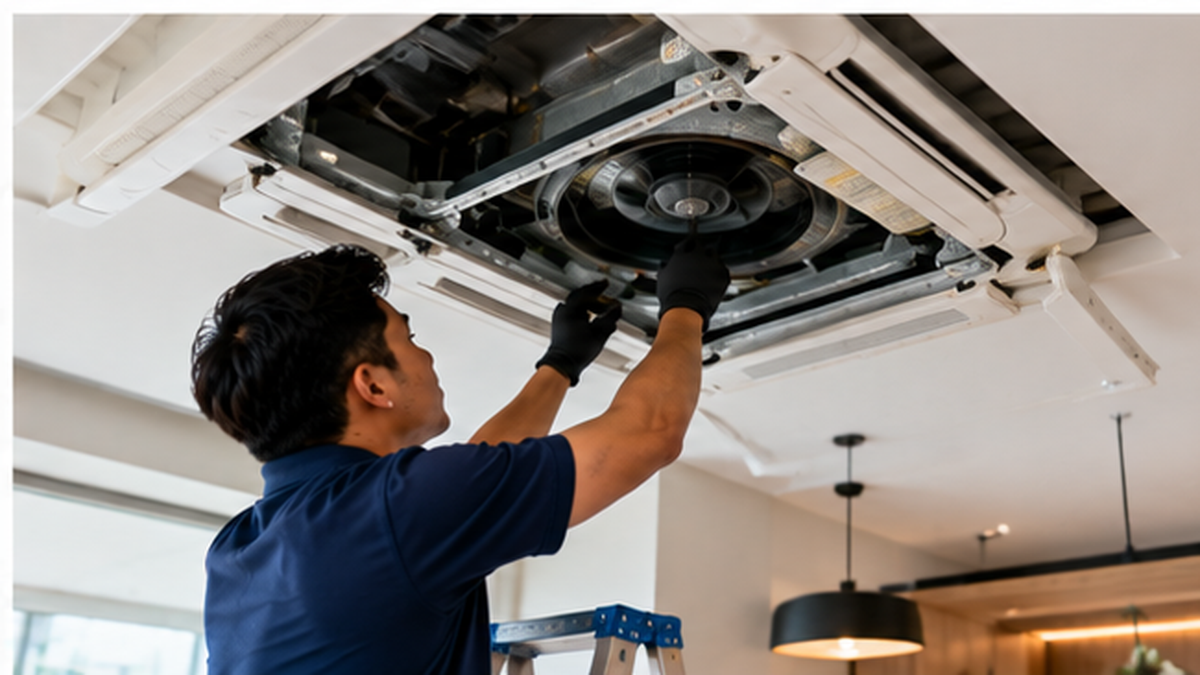
Think beyond the installation day.
A wall-mounted split unit is normally easy to reach for filter cleaning and servicing using a ladder. Cassette filters and internal components are accessed from the ceiling panel, so the unit must be positioned where technicians can safely reach it later.
Do not install a cassette where furniture, permanent partitions, decorative ceiling features or inaccessible voids make future service difficult. A neat installation should still be serviceable.
6. Does Cassette Aircond Use More Electricity Than Split Aircond?
The indoor-unit format alone does not determine electricity consumption.
Both wall-mounted and cassette systems can use inverter technology. Actual energy use depends on the model, cooling capacity, efficiency rating, room heat load, thermostat setting, operating hours and whether the system is correctly sized.
When comparing airconds in Malaysia, compare models of a similar cooling capacity and review their current energy-efficiency information rather than assuming that “cassette” or “split” is automatically more efficient.
Which Type Fits Different Spaces?
| Space | Usually the better starting point | Why |
|---|---|---|
| Bedroom | Wall-mounted split | Simple installation, individual room control and easy servicing |
| Condo / apartment | Wall-mounted split | Works well where ceiling and outdoor-unit locations are restricted |
| Standard living room | Wall-mounted split | Often sufficient when correctly sized and positioned |
| Large open-plan living area | Cassette or larger split after assessment | Airflow distribution and room load become more important |
| Office | Cassette or multiple split units | Depends on layout, ceiling and zoning requirements |
| Retail shop | Cassette | Ceiling integration can preserve display and wall space |
| Restaurant / café | Cassette or commercial system | Open layout, occupancy and heat sources need proper assessment |
Split vs Cassette: Which One Should You Install?
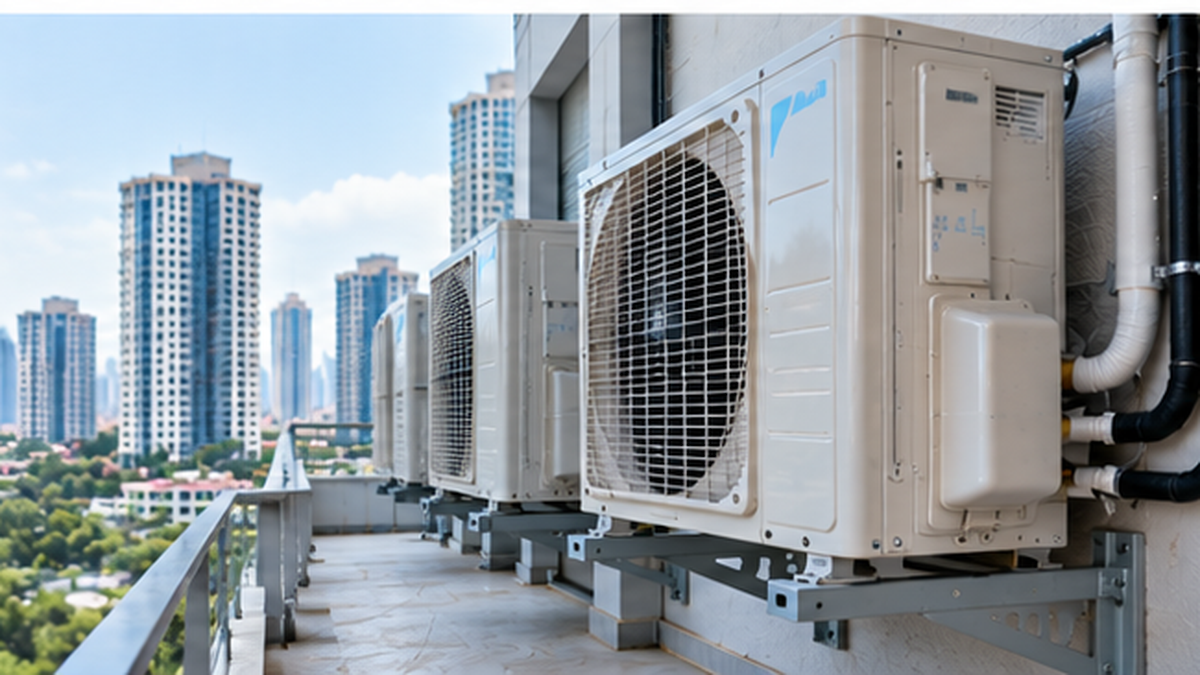
Choose a wall-mounted split aircond when you want a practical, accessible system for a bedroom, apartment, condo or normal room and there is a suitable wall and outdoor-unit route.
Consider a cassette aircond when the space is larger or more open, balanced airflow is important, wall space is limited and the ceiling can properly accommodate the indoor unit and service access.
Do not choose a cassette simply because it appears more premium, and do not choose a split simply because it looks easier to install. The correct decision depends on the room, cooling requirement and building conditions.
Before You Decide, Ask These Questions
- What is the room size and heat load?
- Is the space enclosed or open-plan?
- Is there suitable wall space for a split unit?
- Is there enough ceiling space for a cassette?
- Where can the outdoor condenser be installed?
- How will drainage and refrigerant piping be routed?
- Will technicians be able to access the system for future servicing?
- Is the property residential, commercial or part of a managed building?
Frequently Asked Questions
Which is better: split aircond or cassette aircond?
Neither is universally better. Wall-mounted split airconds suit most bedrooms, condos and standard rooms. Cassette airconds become more useful for larger or open spaces where ceiling installation and wider airflow distribution make sense.
Is cassette aircond suitable for a house?
Yes, if the home has suitable ceiling space and the room benefits from ceiling-based airflow. For a typical bedroom, however, a wall-mounted split is usually simpler.
Does a cassette aircond need a false ceiling?
A recessed cassette normally needs sufficient ceiling void and structural support. Exact requirements depend on the model and building design, so the ceiling should be assessed before purchase or installation.
Is cassette aircond more powerful than split aircond?
Not automatically. Both types are available in different cooling capacities. The correct capacity should be matched to the room rather than inferred from the indoor-unit style.
Can cassette aircond use inverter technology?
Yes. Cassette and wall-mounted systems can both be available with inverter technology, depending on the product range.
Which aircond is easier to maintain?
Wall-mounted split units are generally easier to access in ordinary rooms. Cassette units are serviced from the ceiling panel, so good access must be planned during installation.
Which type is better for an office or shop?
Cassette systems are often attractive for offices and shops because of ceiling integration and multi-directional airflow, but the final design should still reflect the layout, cooling load and zoning needs.
Should I ask an installer before buying the unit?
Yes, especially if you are considering a cassette. A site assessment can identify ceiling, drainage, condenser, electrical and access issues before you purchase equipment that may not suit the space.
Need Help Choosing Before Installation?
Send Aircond Service Harini your location, room dimensions, property type and photos of the proposed indoor and outdoor-unit locations.
The installation requirements can then be assessed before you decide whether a wall-mounted split or cassette system is the more practical option for your space.
Primary CTA: Send the room dimensions and indoor/outdoor location photos before buying so the installer can assess whether split or cassette is practical.